
CONSTRUCTION & MINING OPERATIONS
Heavy Equipment Operations Lack Real-Time Visibility!
Heavy equipment is the most capital-intensive asset in construction and mining. RAMP provides the operational visibility needed to track performance, fuel usage, and project impact across distributed environments — delivering the control modern operations require as they scale.
The Reality of Equipment-Centric Operations
Construction and mining are not software-driven industries
— they are equipment-driven ecosystems.
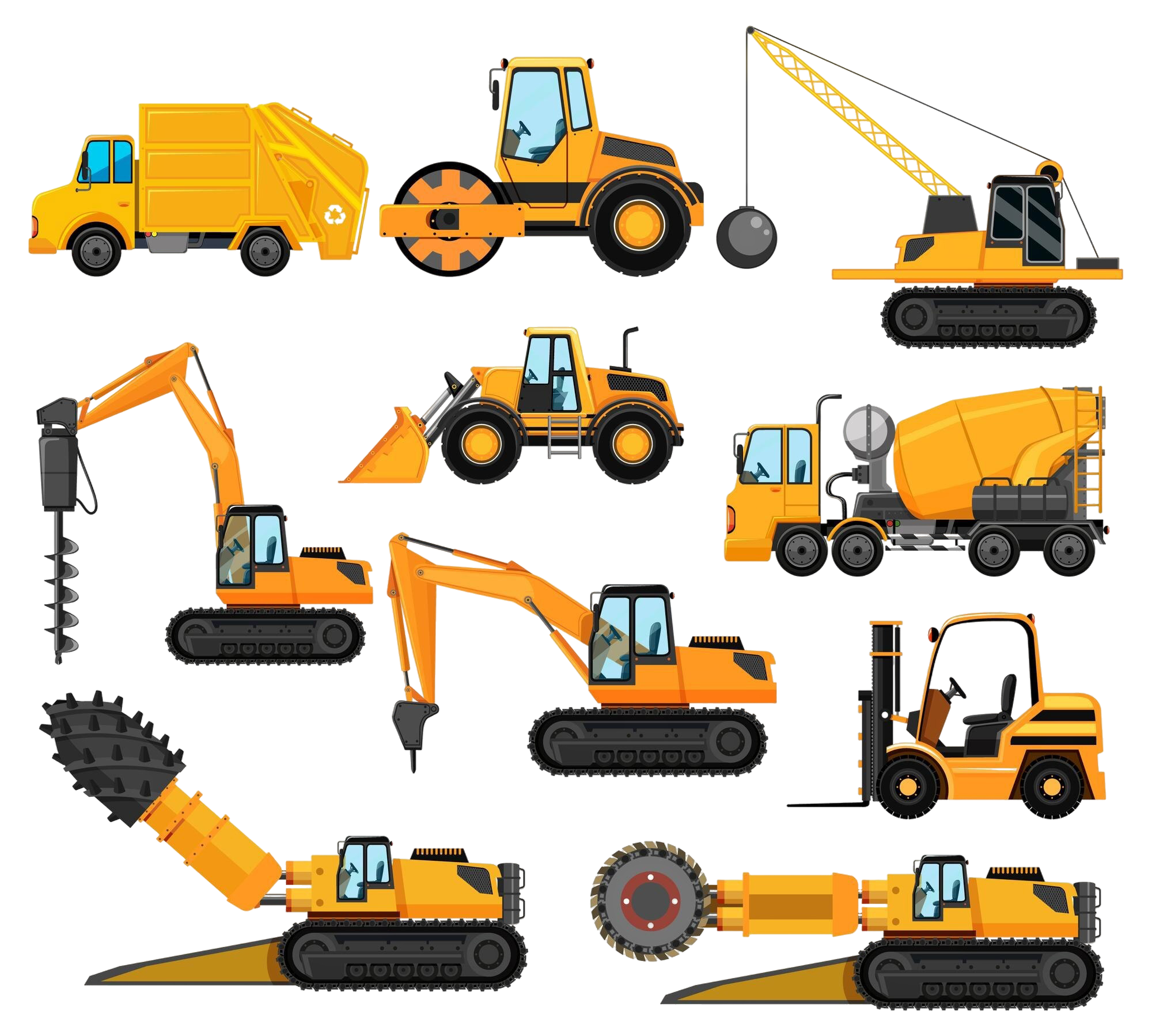
Every excavator, haul truck, crane, loader, and drilling rig represents a significant capital investment and directly influences project timelines, operating costs, safety outcomes, and profitability.
Capital-Intensive Assets
Equipment typically accounts for 15–20% of total project cost, making it the most significant operational investment.
Hidden Cost Accumulation
Inefficiencies like idle time, unplanned downtime, and fuel wastage silently erode margins across sites and projects.
Operational Blind Spots
Fragmented data and manual processes create normalized blind spots that compromise profitability over time.
Equipment decisions shape timelines, costs, safety outcomes, and profitability — whether visible or not.
Operating Complexity at Scale
Why construction and mining operations are hard to control
Modern construction and mining operations operate across multiple, interconnected dimensions. Without unified visibility, each dimension becomes a blind spot.
Multiple Sites & Projects
Equipment moves across construction sites, mining pits, yards, and workshops — often without a single consolidated view of location, readiness, or availability.
Mixed Equipment Fleets
Fleets include machines with vastly different duty cycles, utilization patterns, maintenance needs, and lifespans, yet are often managed using uniform assumptions.
Operators & Human Behavior
Operator habits directly affect fuel consumption, wear and tear, safety, and productivity — but are rarely measured consistently.
Fuel Cost Volatility
Fuel represents one of the largest variable costs in heavy equipment operations, yet consumption is frequently estimated rather than measured.
Maintenance Under Pressure
Maintenance planning is often reactive, driven by failures rather than foresight, leading to higher costs and longer downtime.
Safety & Compliance Requirements
Regulatory, safety, and emissions requirements are increasing — while documentation remains fragmented and manual.
Delayed Decision-Making
Leaders make decisions based on outdated or incomplete data, long after operational windows have passed.
At scale, these dimensions rarely fail independently — they compound.
Value Leakage
Where Equipment-Driven Businesses Lose Money — Without Realizing It
Operational blind spots don't just create inefficiency — they create measurable financial loss.
Unplanned Downtime
Equipment failures cascade into project delays, idle crews, rental expenses, and contractual penalties.
Fuel Waste & Excessive Idling
Idle equipment consumes fuel without producing output, inflating operating costs with no return.
Reactive Maintenance Cycles
Emergency repairs cost significantly more than planned maintenance and disrupt project flow.
Low Asset Utilization
Many fleets operate at 30–50% utilization, leaving assets underused while additional equipment is rented unnecessarily.
Safety Incidents & Compliance Gaps
Incidents increase insurance exposure, regulatory risk, and reputational damage — impacting future bids.
Manual Reporting & Fragmented Data
Spreadsheets, paper logs, and disconnected systems delay insights and obscure accountability.
These losses are not isolated problems — they are symptoms of operating without real-time equipment intelligence.
Industry Shift
From Tracking Equipment to Managing Equipment Lifecycles
Leading construction and mining organizations are changing how they think about equipment.
Equipment is no longer viewed as a static asset to be tracked — it is treated as a dynamic lifecycle investment.
A Modern Equipment Lifecycle Includes
Onboarding & Configuration
Establishing a digital baseline for each asset from the moment it enters operations.
Deployment & Allocation
Assigning equipment intelligently across sites and projects based on readiness and demand.
Daily Operation Visibility
Understanding how equipment is actually used — not how it was planned to be used.
Fuel & Usage Intelligence
Connecting consumption patterns with workload, site conditions, and operator behavior.
Maintenance & Reliability Planning
Shifting from reactive repairs to predictive, scheduled interventions.
Safety, Compliance & Audit Readiness
Maintaining continuous, digital records instead of retroactive documentation.
Performance & ROI Evaluation
Making data-driven decisions on retain, redeploy, refurbish, or retire strategies.
Equipment is no longer a static asset to be tracked — it is a lifecycle investment to be managed.
Digital Maturity
What Digitally Mature Construction & Mining Operations Enable
Digitally mature operators don't rely on isolated tools. They enable connected intelligence across operations.
Unified Equipment Visibility
Across sites and asset types
Fuel Transparency
Tied to actual equipment behavior
Predictive Maintenance Readiness
Instead of emergency response
Operator Accountability
Through measurable behavior patterns
Continuous Compliance & ESG Readiness
Maintaining continuous, digital records
Enterprise-Wide Decision Support
For operations, finance, and leadership
Platforms like RAMP act as enablers of this maturity by unifying data from equipment, people, and systems — but the transformation begins with an industry mindset shift, not software alone.
Role-Based Industry Perspective
How Different Teams Experience Equipment Intelligence
Each role interacts with equipment differently — but all depend on accurate, shared operational insight.
Project Directors & Operations Leaders
Gain real-time visibility into equipment availability, utilization, and project risk — enabling proactive scheduling and cost control.
Equipment & Fleet Managers
Understand asset health, utilization patterns, and redeployment opportunities to maximize return on capital.
Maintenance Teams
Move from firefighting to planned maintenance, with clearer priorities and reduced emergency interventions.
Finance & Procurement Teams
Access transparent total cost of ownership data to support capital planning and investment decisions.
Safety & Compliance Officers
Maintain continuous audit readiness with digital records, trend analysis, and proactive risk management.
Each role benefits differently — but all rely on a shared source of operational truth.
Business Outcomes
What Changes When Equipment Becomes Intelligent
When equipment operations are unified and visible, organizations experience measurable shifts across performance, profitability, and project discipline.
Reduced Project Downtime
Minimize failures that cascade into project delays, idle crews, and contractual penalties.
Measurable Fuel Efficiency
Reduce idle consumption and optimize fuel workflows to protect margins across harsh environments.
Maximized Asset Utilization
Deploy underused equipment rather than renting, ensuring capital capital is always productive.
Early Risk Detection
Identify asset health anomalies and safety risks before they escalate into incidents or major repairs.
Continuous Audit Readiness
Maintain digital-first records for compliance, governance, and ESG reporting for enterprise stakeholders.
Improved Bid Competitiveness
Leverage lower operational overhead to submit more aggressive and profitable project tenders.
These outcomes define the gap between operational leaders and the rest of the market.
Enterprise Readiness Signals
What Equipment Intelligence Requires at Scale
For construction and mining enterprises, any digital initiative must support:
Multi-Site & Multi-Region Scalability
Supporting operations across multiple sites and regions without performance degradation or operational fragmentation
Enterprise System Integration
Integration with existing ERP, telematics, and asset systems to avoid data silos and workflow disruption
Data Security & Governance
Strong data security and governance to meet enterprise risk and compliance standards
Configurable Operational Workflows
Configurable workflows aligned with operational realities rather than rigid, one-size-fits-all processes
Long-Term Data Continuity
Long-term data availability for trend and ROI analysis to support strategic decision-making over time
Equipment intelligence is not a tool — it is an operational foundation.
Frequently Asked Questions
Common questions about construction and mining equipment operations
Common questions we hear from construction and mining leaders.
Why are construction and mining operations considered equipment-centric?
Because heavy equipment directly determines productivity, project timelines, operating costs, and safety outcomes. Unlike service industries, performance is constrained by machine availability, utilization, and reliability—not just workforce capacity.
What are the biggest operational challenges in managing heavy equipment at scale?
The most common challenges include fragmented visibility across sites, reactive maintenance, fuel inefficiency, low asset utilization, compliance complexity, and delayed decision-making caused by disconnected systems and manual reporting.
What does "equipment lifecycle management" mean in construction and mining?
It means managing equipment as a long-term investment—from onboarding and deployment to operation, maintenance, compliance, performance evaluation, and retirement—rather than treating machines as static assets or simple tracking units.
How does lack of equipment visibility impact profitability?
Poor visibility leads to unplanned downtime, excessive idling, fuel waste, underutilized assets, emergency repairs, and compliance risks. These issues compound silently across projects, eroding margins without appearing as a single obvious cost.
What does digital maturity look like for modern construction and mining organizations?
Digitally mature organizations operate with unified, real-time visibility across equipment, people, and processes. Decisions are proactive, maintenance is predictive, compliance is continuous, and equipment performance is measured as a strategic business driver—not an operational afterthought.
Ready to Orchestrate Your Equipment Operations at Scale?
Connect distributed assets, fuel workflows, and maintenance partners into a single, profit-driven equipment intelligence layer.
Explore the RAMP Equipment Infrastructure Today
One Ecosystem. One Network. One Way of Operating.